
Are Purebred Cats Better Than Mixed Breed Cats?
655 views
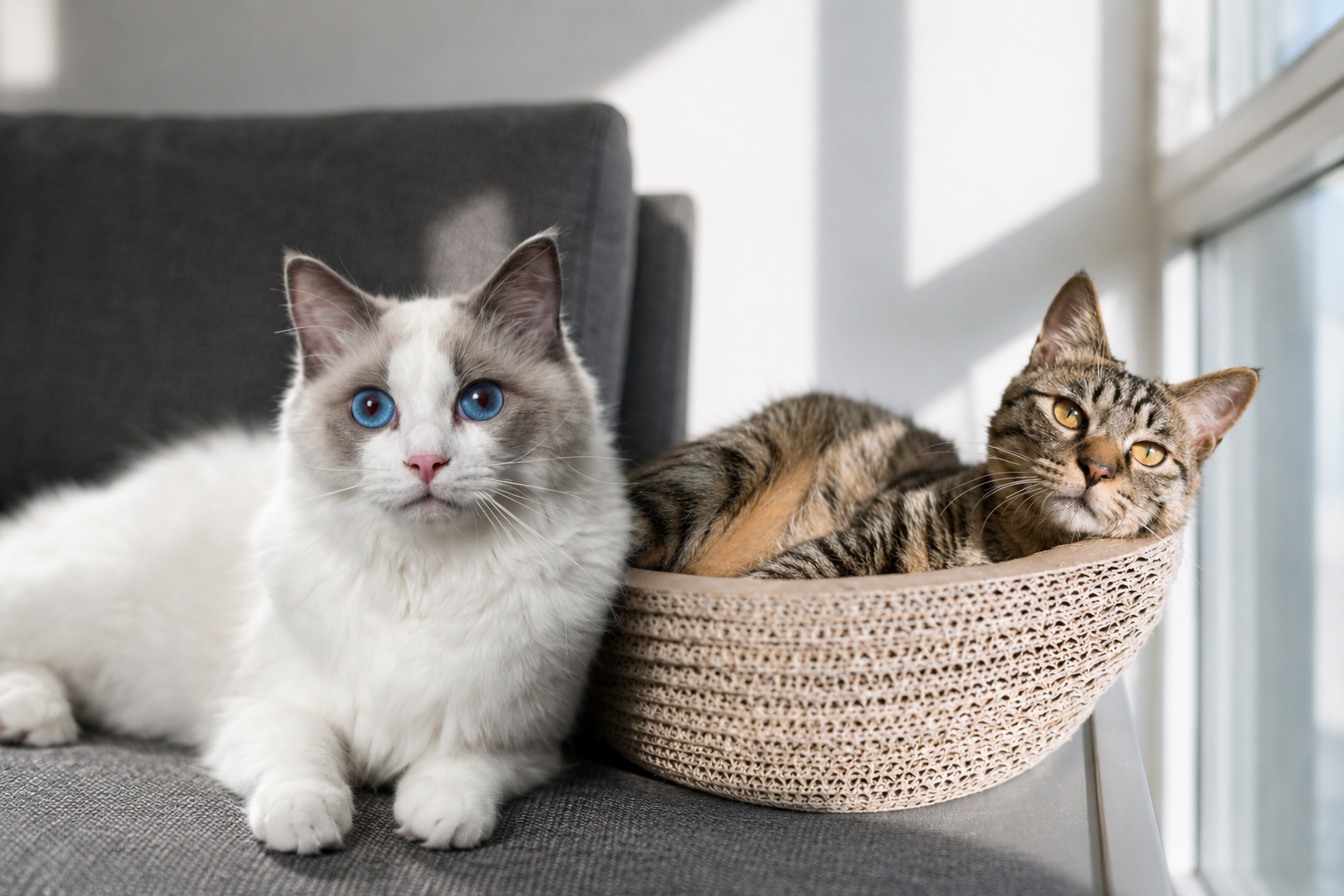
Bringing home a cat sounds simple. Then you start reading breed guides, breeder websites, rescue listings, and social media debates. One person insists a purebred cat is worth every dollar because you know what you're getting. Another argues that mixed breed cats are healthier, friendlier, and far less expensive.
Reality sits somewhere in the middle.
I've met owners who happily spent over $2,500 on a carefully bred kitten, only to discover it hated being picked up. I've also seen adopted shelter cats with unknown ancestry become affectionate companions for nearly two decades. Genetics matter. So does environment. Early socialization often changes the story more than people expect.
The better choice depends on your expectations, lifestyle, budget, and willingness to handle potential health issues—not simply whether a cat has a pedigree.
Purebred vs Mixed Breed Cats at a Glance
Feature | Purebred Cats | Mixed Breed Cats |
|---|---|---|
Predictability | High | Moderate to Low |
Purchase Price | Typically $800–$5,000+ | Usually $50–$300 adoption fee |
Health Risks | May inherit breed-specific disorders | Generally broader genetic diversity |
Personality | More predictable | Highly individual |
Availability | Limited breeders | Widely available through shelters |
Registration | Often registered with pedigree organizations | Usually not registered |
No category automatically wins.
What Actually Makes a Cat "Purebred"?
A purebred cat comes from generations of documented ancestry. Reputable breeders maintain pedigree records through organizations such as the Cat Fanciers' Association (CFA) or The International Cat Association (TICA). Breed standards define everything from coat texture and eye color to body shape and temperament.
Those records aren't just paperwork.
Responsible breeders typically perform genetic screening before breeding cats. Modern DNA testing can identify mutations linked to conditions like:
Hypertrophic cardiomyopathy (HCM)
Polycystic kidney disease (PKD)
Progressive retinal atrophy (PRA)
Pyruvate kinase deficiency
Screening doesn't eliminate every health problem. It simply reduces predictable risks.
Poor breeding practices, unfortunately, still exist. Backyard breeders often skip health testing altogether while advertising kittens at prices similar to ethical breeders.
Mixed Breed Cats: Nature Likes Variety
Most household cats fall into this category.
They're commonly called Domestic Shorthair, Domestic Medium Hair, or Domestic Longhair—not actual breeds but classifications based on coat length.
Their ancestry is usually impossible to map without genetic testing, and even commercial cat DNA kits provide estimates rather than definitive breed percentages.
That uncertainty creates surprises.
A kitten with average-looking parents might develop striking green eyes, unusually soft fur, or a personality that resembles breeds like the Siamese or Maine Coon despite having no documented lineage.
Genetic diversity also plays an interesting role.
Scientists generally recognize that broader genetic variation can reduce the chance of inherited recessive diseases appearing. That doesn't make mixed breed cats immune to illness. Diabetes, kidney disease, dental disease, obesity, and cancer affect cats regardless of pedigree.
Health: The Biggest Misunderstanding
Many people say mixed breed cats are "always healthier."
Not quite.
A well-bred purebred cat from parents tested for hereditary diseases may actually have lower risks than a poorly cared-for mixed breed cat exposed to infectious diseases, parasites, poor nutrition, or neglect during early life.
Lifestyle matters.
Indoor cats routinely live 13–17 years, while many reach their early twenties with excellent veterinary care. Outdoor access has a much larger impact on average lifespan than breed status alone because of traffic accidents, infectious disease exposure, toxins, and predator attacks.
Some breed-specific examples include:
Breed | Common Genetic Concern |
|---|---|
Persian | Polycystic kidney disease |
Maine Coon | Hypertrophic cardiomyopathy |
Ragdoll | Hypertrophic cardiomyopathy |
Scottish Fold | Osteochondrodysplasia affecting cartilage |
Sphynx | Skin care challenges and heart disease risk |
Responsible breeders increasingly use DNA screening alongside echocardiograms or ultrasound evaluations for breeding cats where recommended.
That extra testing costs money. It's one reason reputable kittens command higher prices.
Personality Isn't Written in Stone
People often shop for personality.
Sometimes it works.
If you choose a Ragdoll, you have a reasonable expectation of a calm, people-oriented cat. Siamese cats often vocalize frequently. Bengals usually need significant mental stimulation and physical activity.
Still, personalities aren't manufactured.
One Bengal may spend hours chasing puzzle toys while another prefers sleeping beside a sunny window. I've watched supposedly independent cats become velcro companions after a few months in a quiet home.
Environment shapes behavior almost as much as genetics.
Kittens handled gently between roughly two and seven weeks of age generally become more confident around people. Poor early experiences can leave long-lasting effects regardless of breed.
Cost Isn't Just the Purchase Price
Sticker shock catches many first-time buyers.
Approximate 2026 pricing often looks like this:
Shelter adoption: $50–300
Purebred kitten from reputable breeder: $800–5,000+
Rare breeds: sometimes exceeding $6,000
That's only the beginning.
Annual ownership costs—including food, litter, routine veterinary visits, parasite prevention, toys, scratching posts, and pet insurance—can easily reach $800–2,000 depending on location and healthcare choices.
Unexpected emergencies change everything.
A blocked urinary tract in a male cat may require emergency treatment costing well over $1,500 in many veterinary hospitals. Orthopedic surgery or hospitalization can exceed several thousand dollars.
Pet insurance, if purchased early before pre-existing conditions develop, may offset large unexpected expenses depending on the policy's reimbursement percentage, deductible, annual limit, and waiting periods.
Grooming Differences Can Surprise You
Here's something many new owners overlook.
Long-haired breeds don't simply shed more—they require maintenance.
Persians often need daily brushing because mats develop quickly behind the ears, under the legs, and around the collar area. Skip grooming for a week or two and you may face painful tangles requiring professional shaving.
Sphynx cats create the opposite challenge.
No fur doesn't mean no maintenance.
Skin oils accumulate because there's little hair to absorb them, so regular bathing and ear cleaning become part of the routine.
Many Domestic Shorthairs, meanwhile, practically handle grooming themselves with only occasional brushing during seasonal shedding.
Simple. Mostly.
Ethical Questions Matter Too
Not every breed developed without controversy.
Scottish Fold cats owe their distinctive folded ears to a genetic mutation affecting cartilage throughout the body. Veterinary organizations in several countries have expressed welfare concerns because the same mutation may contribute to painful skeletal problems.
Flat-faced breeds, including some Persian bloodlines, can experience breathing difficulties, tear overflow, and dental crowding depending on facial structure.
Good breeders actively select for healthier traits rather than exaggerated appearances.
That's worth asking about before purchasing.
Questions I'd always recommend asking include:
Have both parents received recommended health screening?
Can you provide veterinary records and pedigree documentation?
What socialization has the kittens experienced?
The answers usually reveal far more than glossy photos.
Shelter Cats Deserve Serious Consideration
Animal shelters receive millions of cats over time through owner surrender, stray intake, and rescue operations.
Many arrive already vaccinated, microchipped, spayed or neutered, and medically examined before adoption.
Older cats deserve attention too.
Their personalities are already established. You know if they're playful, quiet, sociable, or independent. That predictability often reduces surprises compared with adopting an eight-week-old kitten.
I've seen countless families skip shelter visits because they wanted a specific breed, only to discover a wonderful companion waiting in the first adoption room they entered.
Sometimes the perfect cat isn't rare at all.
Which One Fits Your Lifestyle?
Instead of asking which type is objectively better, ask different questions.
A busy apartment dweller who wants a relaxed companion may appreciate the predictable temperament of certain purebred lines.
Someone hoping to provide a home for an affectionate family pet while keeping upfront costs manageable may find a mixed breed shelter cat ideal.
Neither decision is automatically smarter.
Compatibility beats pedigree every time.
Frequently Asked Questions
Are mixed breed cats healthier than purebred cats?
Often, but not always. Mixed breed cats generally benefit from greater genetic diversity, which may reduce inherited disorders. Individual health still depends heavily on nutrition, veterinary care, early life conditions, and responsible ownership.
Why are purebred cats so expensive?
Reputable breeders invest in genetic testing, vaccinations, veterinary examinations, registration fees, pedigree documentation, quality nutrition, and proper socialization. Ethical breeding programs also produce relatively few litters each year, increasing costs.
Can mixed breed cats live longer?
Many do, especially when kept indoors with regular veterinary care. However, lifespan varies more because of healthcare, weight management, dental care, and accident prevention than breed status alone.
Should first-time cat owners choose a purebred?
Not necessarily. Many first-time owners thrive with mixed breed shelter cats because they're affordable and widely available. Others prefer the temperament predictability offered by certain established breeds. Lifestyle should guide the decision.
Is adopting better than buying from a breeder?
If your priority is giving a cat a home while reducing adoption costs, shelters are an excellent option. If you need specific behavioral traits or have allergy considerations that point toward particular breeds, choosing a reputable breeder can also be a responsible decision.
The Best Cat Is the One That Fits Your Life
Pedigree certificates don't guarantee happiness, and mixed ancestry doesn't guarantee perfect health. Spend more time evaluating temperament, health records, breeder or shelter reputation, and your own daily routine than chasing labels.
Visit a shelter. Talk with ethical breeders if you're considering a specific breed. Ask difficult questions. Observe how the cat interacts with people.
Those few extra hours of research can shape the next 15 to 20 years—for both you and your future feline companion.
purebred cats
mixed breed cats
cat breed comparison
adopting cats
cat ownership
Found this helpful? Share it!