
Hamster Cage Setup Guide for Beginners
733 views
Bringing home a hamster is exciting. Setting up its cage? That's where many first-time owners make expensive mistakes.
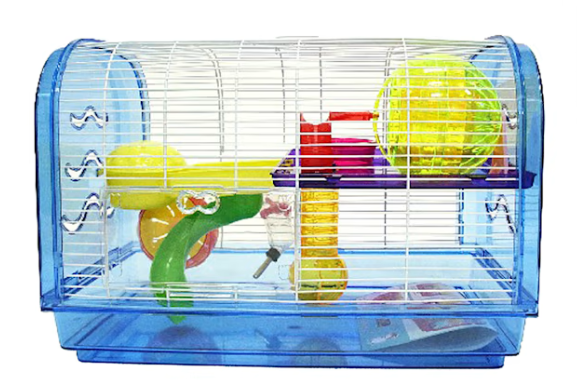
Walk into a pet store and you'll often see colorful starter cages with bright plastic tubes, tiny wheels, and flashy packaging claiming they're "perfect for hamsters." They look fun. The problem is that many of them simply aren't large enough for long-term welfare. A cage that seems spacious to us can feel incredibly restrictive to an animal that naturally runs several miles every night searching for food.
A thoughtful setup doesn't have to be expensive. It does, however, need to prioritize space, enrichment, and safety over appearance. After helping new owners troubleshoot everything from escaping dwarfs to stressed Syrian hamsters chewing bars nonstop, one pattern keeps repeating: a few smart choices during setup prevent months of frustration later.
Start with the cage, not the accessories
Most people buy decorations first.
Don't.
The enclosure determines almost everything else.
Current welfare recommendations from organizations such as the UK's Royal Society for the Prevention of Cruelty to Animals (RSPCA) and guidance from experienced exotic veterinarians favor large, uninterrupted floor space instead of tall, multi-level cages.
A practical target for beginners is:
Hamster Type | Recommended Floor Space | Wheel Size |
|---|---|---|
Syrian | At least 100 × 50 cm (5,000 cm²) | 28–30 cm (11–12 in) |
Dwarf (Campbell's, Winter White, Roborovski) | At least 80 × 50 cm (4,000 cm²) | 20–25 cm (8–10 in) |
Chinese | Similar to dwarf recommendations | 22–28 cm |
Bigger almost always means better.
Glass aquariums, large terrariums, IKEA DIY conversions, and modern wire cages with deep bases generally outperform the tiny plastic "starter homes" commonly sold in chain pet stores.
One mistake catches beginners by surprise. Interior dimensions matter—not exterior measurements. Thick plastic frames or curved walls can reduce usable floor space more than expected.
Ventilation matters more than fancy designs
Hamsters produce ammonia through urine, especially if they repeatedly use the same toilet corner.
Poor airflow traps moisture, increases odor, and encourages mold growth inside bedding.
Wire cages naturally provide excellent ventilation but may scatter bedding across the floor. Glass enclosures hold deep substrate beautifully but require large mesh lids to maintain healthy airflow.
Avoid fully enclosed plastic habitats connected by long tunnel systems.
They look entertaining for humans. Cleaning them every week quickly becomes a chore.
Some sections stay damp longer than expected, especially around hidden corners where urine collects.
Bedding: Go deeper than you think
This surprises nearly everyone.
Wild hamsters spend significant time underground, building elaborate burrow systems that may contain multiple chambers for nesting and food storage.
A thin decorative layer isn't enough.
Aim for:
20–30 cm (8–12 inches) of compactable bedding
Unscented paper bedding or kiln-dried aspen shavings
Extra nesting paper for sleeping areas
Paper-based products like Kaytee Clean & Cozy, Full Cheeks Paper Bedding, and Carefresh are commonly used because they hold tunnels well without producing the aromatic oils found in cedar or untreated pine.
Avoid cedar entirely.
Fresh pine should also be avoided because naturally occurring phenols may irritate a hamster's respiratory system. Kiln-dried aspen remains one of the safer wood options.
Packing bedding slightly by hand helps tunnels stay intact. Loose fluffy bedding tends to collapse surprisingly fast.
Choosing the right exercise wheel
A wheel isn't a toy.
It's daily exercise equipment.
If the wheel is too small, the hamster's spine bends while running. Night after night, that awkward posture can become a welfare concern.
Look for:
Solid running surface
Quiet bearings
Stable stand
Proper diameter
Mesh wheels and wire rung wheels should generally be avoided because tiny feet can slip through gaps, sometimes causing injuries.
Silent spinner-style wheels have improved considerably over recent years. Ball-bearing models often stay quieter than basic axle designs, although occasional lubrication of approved moving parts may reduce squeaking after months of use.
Don't overcrowd the cage
This is where beginners often get carried away.
A bridge.
Three tunnels.
Five houses.
Artificial plants.
Ceramic mushrooms.
Suddenly there's hardly any room left.
Instead, focus on useful enrichment.
Essentials
One enclosed hide
Multi-chamber hideout if possible
Sand bath
Cork tunnel
Natural branches from safe woods
Chew toys
Water bottle or heavy ceramic bowl
Leave open running paths between enrichment items. Hamsters frequently develop predictable travel routes around their enclosure, and clutter interrupts those natural patterns.
Sand baths aren't optional for many hamsters
Dwarf hamsters, especially Roborovskis, often spend a surprising amount of time rolling in sand.
Use dust-free reptile sand or hamster-safe bathing sand.
Never use chinchilla dust.
Dust products contain much finer particles that can irritate delicate respiratory systems.
A ceramic baking dish or glass container works remarkably well as a permanent sand bath because it's difficult to tip over and easy to clean.
Food bowls...or scatter feeding?
Here's an easy upgrade.
Skip the bowl most days.
Scatter feeding encourages natural foraging behavior by making the hamster search around bedding instead of collecting everything from one location.
Experienced keepers often scatter approximately one tablespoon of quality hamster mix for Syrian hamsters or slightly less for dwarf species, adjusting portions according to body condition and leftovers.
Fresh vegetables can still be offered separately in a small dish.
Water bottles vs bowls
Both work.
Both have drawbacks.
Water Bottle | Water Bowl |
|---|---|
Cleaner water | More natural drinking position |
Less contamination | Easier to monitor intake |
Requires regular leak checks | Needs frequent cleaning |
May clog unexpectedly | Bedding sometimes falls inside |
Test bottles every single day.
Seriously.
A blocked drinking tube isn't always obvious, and a hamster can become dehydrated much faster than many owners realize.
Temperature and room placement
Hamsters dislike dramatic temperature swings.
Keep the enclosure in a room maintained roughly between 18°C and 24°C (65–75°F).
Avoid placing cages:
Next to radiators
In direct afternoon sunlight
Under air-conditioning vents
Beside loud speakers
Near constantly opening doors
Even something as simple as late-afternoon sunlight through a window can overheat a glass enclosure surprisingly quickly.
Cleaning without destroying their home
Many owners proudly deep-clean every weekend.
Ironically, that's often too much.
Hamsters depend heavily on scent to recognize their territory.
Replacing every bit of bedding each week removes those familiar smells, which can increase stress and trigger excessive scent marking afterward.
A better routine usually looks like this:
Spot-clean wet bedding every few days.
Replace sections gradually while leaving most clean bedding undisturbed.
Food hoards deserve special attention.
Some stored foods spoil. Others stay perfectly dry for weeks. Check carefully before throwing everything away.
Common beginner mistakes that cause problems
Not every issue appears immediately.
Some develop after a few weeks.
The most frequent ones include:
Buying the smallest cage available because it's marketed as a "starter."
Using scented bedding or air fresheners nearby.
Choosing decorative cotton nesting fluff, which can wrap around tiny limbs.
Housing two Syrian hamsters together. Adults are solitary and commonly fight.
Buying exercise balls for long sessions. Many animal welfare organizations now discourage their routine use because of ventilation limitations, poor navigation, and stress concerns.
Ignoring bar spacing. Dwarf hamsters can squeeze through surprisingly narrow gaps—generally anything wider than about 7–8 mm may allow escapes depending on the species.
One escape is usually enough to convince someone to measure twice next time.
Budget expectations for a quality setup
A realistic beginner budget in 2026 looks something like this:
Item | Typical Price (USD) |
|---|---|
Large enclosure | $80–200 |
Exercise wheel | $20–45 |
Bedding (initial fill) | $25–50 |
Sand bath and sand | $15–35 |
Multi-chamber hide | $20–40 |
Food and chews | $20–35 |
Water bottle or bowl | $5–15 |
Expect an initial investment between $180 and $400, depending on enclosure choice and local prices.
Monthly costs usually drop significantly after the initial setup since bedding, food, and enrichment items are replaced gradually rather than all at once.
FAQs
How often should I completely clean a hamster cage?
Rarely. Spot-clean every few days and perform partial bedding changes as needed. Full cleanouts should generally be limited unless medically necessary or the enclosure becomes excessively dirty.
Can two dwarf hamsters live together?
Some species have been housed in same-sex pairs under carefully managed conditions, but aggression can develop suddenly. Most veterinarians and welfare organizations recommend housing pet hamsters individually to avoid injuries.
Is a glass aquarium better than a wire cage?
Neither is universally better. Aquariums excel at holding deep bedding and reducing mess, while wire cages provide excellent ventilation. The larger enclosure with appropriate airflow is usually the better choice.
Why is my hamster chewing the cage bars?
Bar chewing commonly points to boredom, inadequate space, insufficient enrichment, or stress. Increasing floor space, adding deeper bedding, improving foraging opportunities, and providing safe chew materials often reduces the behavior.
Do hamsters need lights inside their cage?
No. Regular room lighting that follows a normal day-and-night cycle is sufficient. Bright cage lights can disturb natural sleep patterns.
Build the habitat your hamster actually needs
A hamster won't care whether its hideout matches your room décor or whether the wheel comes in trendy colors. It will notice deep bedding that supports tunneling, enough floor space to roam without constantly hitting obstacles, and enrichment that keeps every night interesting.
Start with a generously sized enclosure. Add depth before decorations. Watch how your hamster uses the space during its first few weeks, then adjust the layout instead of assuming the initial setup is perfect. Those small refinements usually make the biggest difference over the years your pet calls that cage home.
hamster cage setup
beginner hamster care
hamster habitat
hamster cage ideas
hamster bedding
pet hamster guide
hamster accessories
hamster wheel
hamster enclosure
hamster care tips
Found this helpful? Share it!