
The Pet Hair Vacuum I Wish I Bought Earlier
224 views
I spent far too long convincing myself that a lint roller, a broom, and a lot of patience were enough.
They weren't.
Every morning started the same way. A fresh layer of fur drifted across hardwood floors. My couch looked clean from a distance, but one quick sit in dark clothing proved otherwise. Even worse, tiny hairs somehow found their way into corners I didn't think dust could reach.
I kept buying cheap vacuum cleaners, hoping each one would finally solve the problem. They worked...for about a month. Then the brush roller tangled, suction dropped, and cleaning became another chore I wanted to avoid.
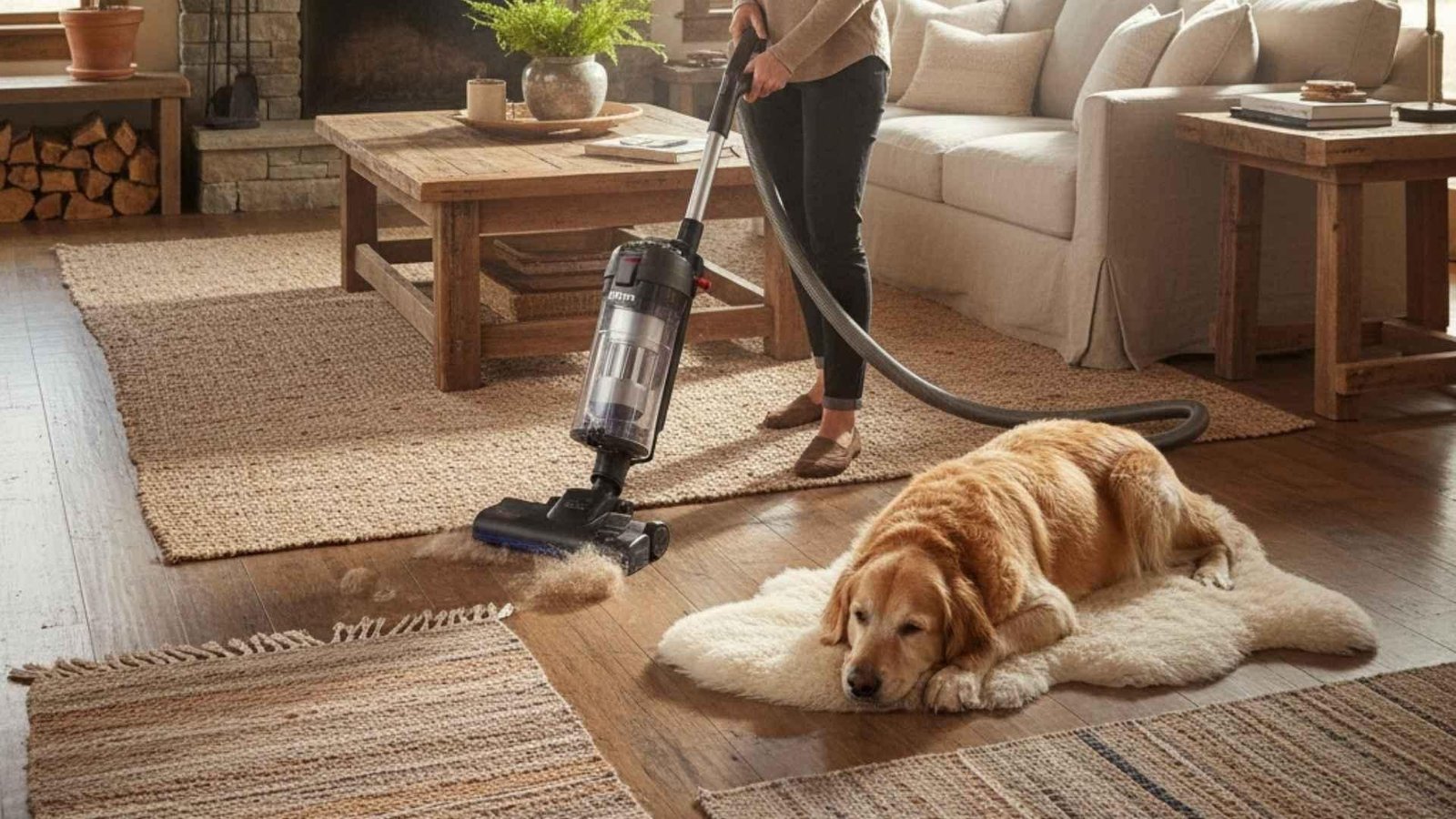
Looking back, I wish I had invested in a vacuum designed specifically for pet hair much earlier. It didn't eliminate shedding—nothing can—but it completely changed how manageable it became.
The mistake I kept repeating
Price was the only thing I looked at.
That sounds reasonable until you realize many inexpensive vacuums are built for ordinary dust, not stubborn pet hair. There's a difference.
Pet hair behaves differently than dirt. It wraps around brush rolls, clings to upholstery through static electricity, and packs itself tightly into carpet fibers. Human hair can be annoying. Pet hair is relentless.
I eventually learned that strong suction alone isn't enough. Brush design, airflow, filtration, and maintenance all matter just as much.
That lesson cost me three disappointing purchases.
Why pet hair is surprisingly difficult to remove
Animal hair isn't simply sitting on top of the floor.
Dogs and cats produce natural skin oils that help hair cling to fabrics. Walking across carpets creates static electricity, making loose fur stick even more. Add fine dust, dander, and tiny fibers from blankets, and suddenly your vacuum has to separate a tangled mixture instead of collecting loose debris.
Research from veterinary and indoor air quality organizations also highlights another issue: pet dander is often a greater concern than the visible hair itself. Dander consists of microscopic skin particles that can remain airborne and settle throughout the home. High-efficiency filtration systems, particularly sealed systems with HEPA filters, help capture these particles instead of releasing them back into the room.
That changed the way I evaluated vacuum cleaners.
I stopped asking, "How much power does it have?"
Instead I asked, "Where does the air go after it picks everything up?"
Big difference.
Features I ignored—but shouldn't have
A brush roll that untangles itself
This one surprised me.
My previous vacuum required scissors every couple of weeks because hair wrapped tightly around the roller.
Modern anti-tangle brush designs aren't just marketing. They use specially shaped fins, combs, or angled bristles that continuously remove wrapped hair while cleaning. Less downtime. Less frustration.
Simple.
Sealed HEPA filtration
A HEPA filter by itself isn't enough if the vacuum leaks air around the housing.
A sealed filtration system forces incoming air through the filter before it's exhausted. According to organizations that establish air filtration standards, true HEPA filters capture at least 99.97% of particles measuring 0.3 microns under specified testing conditions.
That matters if someone in your home deals with allergies.
Consistent suction
Peak suction figures don't tell the whole story.
I found that maintaining airflow while the dust bin fills is much more valuable than impressive specifications on the box. Good cyclone separation or well-designed airflow pathways help prevent suction from fading halfway through cleaning.
Attachments that actually get used
I used to think extra tools were just accessories I'd lose.
Turns out the motorized upholstery attachment became my favorite part of the vacuum.
Pet beds.
Car seats.
Stairs.
The couch where my cat insists on sleeping despite having three perfectly good beds.
Those areas became dramatically easier to clean.
Corded or cordless?
I switched to cordless.
No regrets.
Still, both options have strengths.
Cordless vacuums are easier to grab for quick daily cleaning. That's important because pet hair accumulates continuously rather than once a week. If cleaning becomes easier, you'll probably do it more often.
Corded models, however, usually provide unlimited runtime and are still excellent for larger homes with extensive carpeting.
Think honestly about your routine.
If dragging a cord around the house makes you postpone cleaning for several days, convenience might be worth more than maximum power.
Carpet changed everything
Hard floors fooled me into thinking the house was clean.
Then I vacuumed the living room carpet using a better machine.
The amount of hidden fur collected during that first session was honestly embarrassing. The carpet looked clean beforehand, yet the dust bin filled astonishingly fast.
That's because carpets trap hair below the surface where ordinary sweeping can't reach.
After that experience, I started vacuuming high-traffic carpeted areas twice each week instead of waiting until everything looked dirty.
The house stayed noticeably fresher.
Small maintenance habits that make a huge difference
I used to blame the vacuum.
Sometimes it deserved it.
Sometimes it didn't.
Keeping a pet vacuum performing well isn't complicated, but ignoring maintenance slowly reduces effectiveness.
A few habits made the biggest difference:
Empty the dust container before it's completely full.
Wash reusable filters according to the manufacturer's instructions.
Check the brush roll regularly for thread, ribbon, or long hair.
Inspect the air pathways if suction suddenly drops.
Replace filters when recommended rather than waiting until they look terrible.
Five minutes of maintenance every month saved me from wondering why cleaning suddenly became harder.
Things manufacturers don't always emphasize
Noise.
Weight.
Balance.
Those details rarely appear in flashy advertisements, yet they determine whether you'll enjoy using the vacuum or avoid it.
A heavy vacuum might clean brilliantly, but carrying it upstairs several times a week becomes exhausting surprisingly quickly.
Likewise, an oversized cleaning head may struggle to fit beneath furniture where pet hair loves to collect.
I learned to pay attention to ergonomics instead of focusing exclusively on technical specifications.
Comfort influences consistency.
Consistency beats occasional deep cleaning.
What I would buy differently now
If I were shopping today, I'd narrow my checklist quickly.
A sealed HEPA filtration system.
An anti-tangle brush roll.
Strong upholstery tools.
Everything else comes afterward.
Fancy displays? Nice.
Wi-Fi connectivity? I can live without it.
Automatic dirt detection? Helpful, but not essential.
The basics matter far more than extra features you'll barely notice after the first week.
Common buying mistakes
Not every expensive vacuum is automatically the best choice.
These mistakes are surprisingly common:
Buying based only on suction claims
Manufacturers measure performance differently, making direct comparisons difficult. Real-world cleaning depends on airflow, brush design, filtration, and floor contact.
Ignoring replacement costs
Filters, batteries, and brush rolls eventually wear out.
Before purchasing, check whether replacement parts are widely available and reasonably priced.
Forgetting your flooring
Homes with mostly hardwood have different needs than homes filled with thick carpeting and large area rugs.
Matching the vacuum to your floors usually produces better results than chasing the highest advertised specifications.
Assuming pet hair is the only problem
Hair is visible.
Dander isn't.
If indoor allergies are a concern, filtration deserves equal attention.
A cleaning routine that actually worked
Oddly enough, I stopped doing marathon cleaning sessions.
Instead:
Monday: Living room.
Wednesday: Bedrooms.
Friday: Whole-house quick pass.
It rarely took more than fifteen minutes at a time.
Because hair never had the chance to build up, cleaning became easier every week rather than harder.
Funny how that works.
Frequently Asked Questions
Do pet vacuums work on human hair too?
Yes. Models designed for pet hair generally perform well on long human hair because anti-tangle brush systems help prevent wrapping around the roller.
Is a HEPA filter necessary if nobody has allergies?
Not strictly necessary, but it's still beneficial. HEPA filtration captures fine dust, dander, pollen, and other small particles that ordinary filters may miss, helping improve indoor cleanliness.
Should I vacuum every day if I own a pet?
It depends on the breed, shedding season, and flooring. Many pet owners find that vacuuming high-traffic areas several times a week keeps hair under control without requiring daily deep cleaning.
Can robot vacuums replace a full-size pet vacuum?
For many homes, no. Robot vacuums are excellent for daily maintenance but often struggle with deep carpet cleaning, furniture upholstery, stairs, and heavily embedded fur. Many households use both together.
How often should vacuum filters be replaced?
Always follow the manufacturer's maintenance schedule. Washable filters typically require periodic cleaning, while disposable filters should be replaced at the intervals recommended by the manufacturer to maintain airflow and filtration efficiency.
If I could give my past self one piece of advice
I'd skip buying three mediocre vacuums and put that money toward one machine designed for homes with pets.
Not because it magically stops shedding.
Because it removes the daily frustration that comes with it.
Clean floors are nice. A couch that doesn't leave every visitor covered in fur is even better. And once you find a vacuum that makes regular cleaning feel quick instead of exhausting, you'll probably wonder the same thing I did:
Why didn't I buy it sooner?
pet hair vacuum review
vacuum for pet owners
dog hair vacuum comparison
best vacuum pet fur
pet cleaning products
Found this helpful? Share it!